Match the layout to your cucumber planting
This guide covers garden beds, trellised rows and draining containers. Locate the root positions before laying pipe: a vine extending across a bed does not need an outlet under every leaf. A trellis makes harvesting easier but does not make every plant's water use identical. Keep irrigation tubing clear of stakes, paths and tools.
From establishment to harvest
For a newly planted seedling, first confirm moisture reaches its small root ball. Direct-sown plants also need appropriate moisture in the seed zone; a deep wet patch can coexist with a dry surface. Recheck the layout as roots and leaf area expand. During fruit production, inspect the bed regularly instead of assuming the original timer remains adequate. University of Minnesota recommends soil-directed watering for cucumbers and notes that sandy soil and trellised plants can require different watering frequency. Cucumber growing guidance
Design the wetted strip
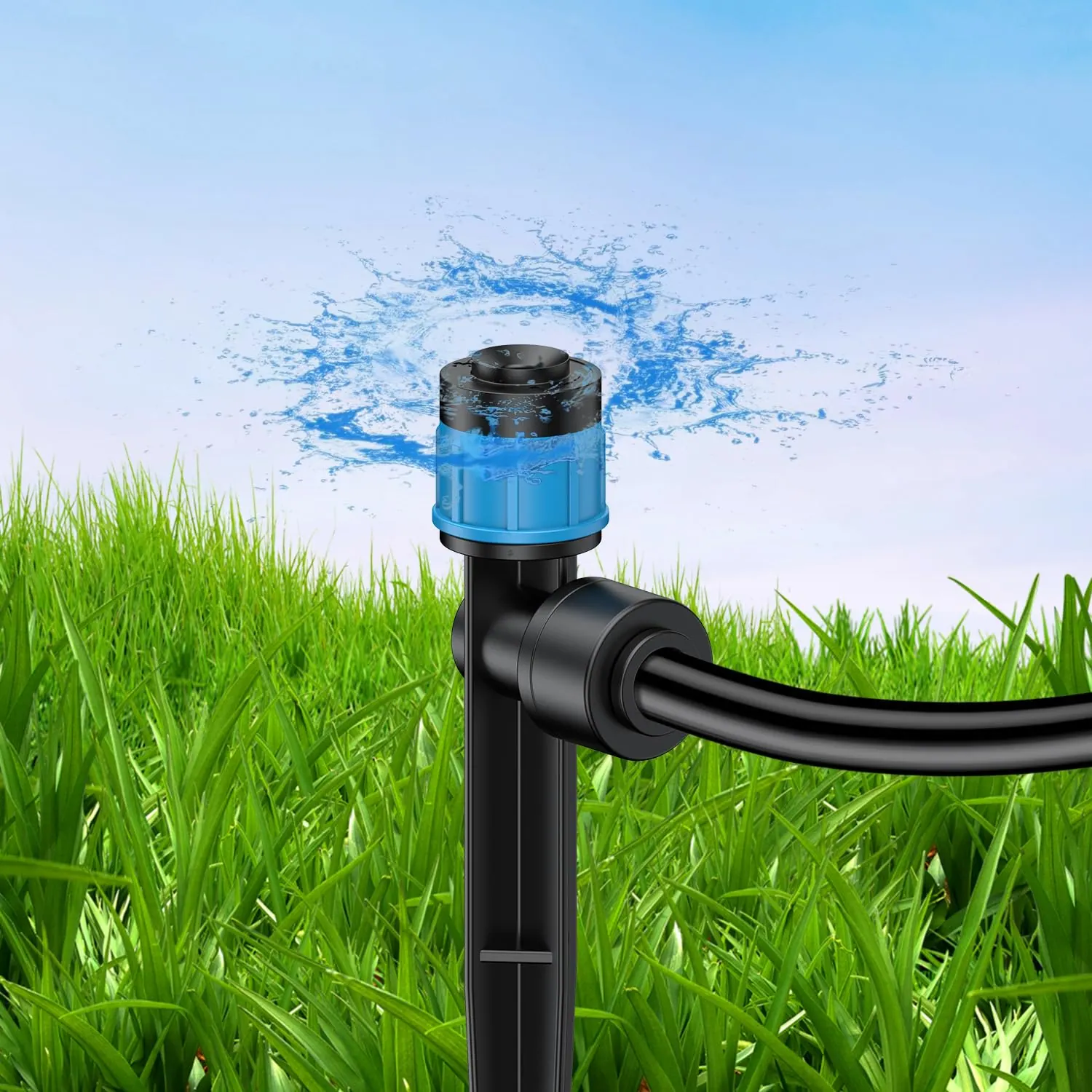
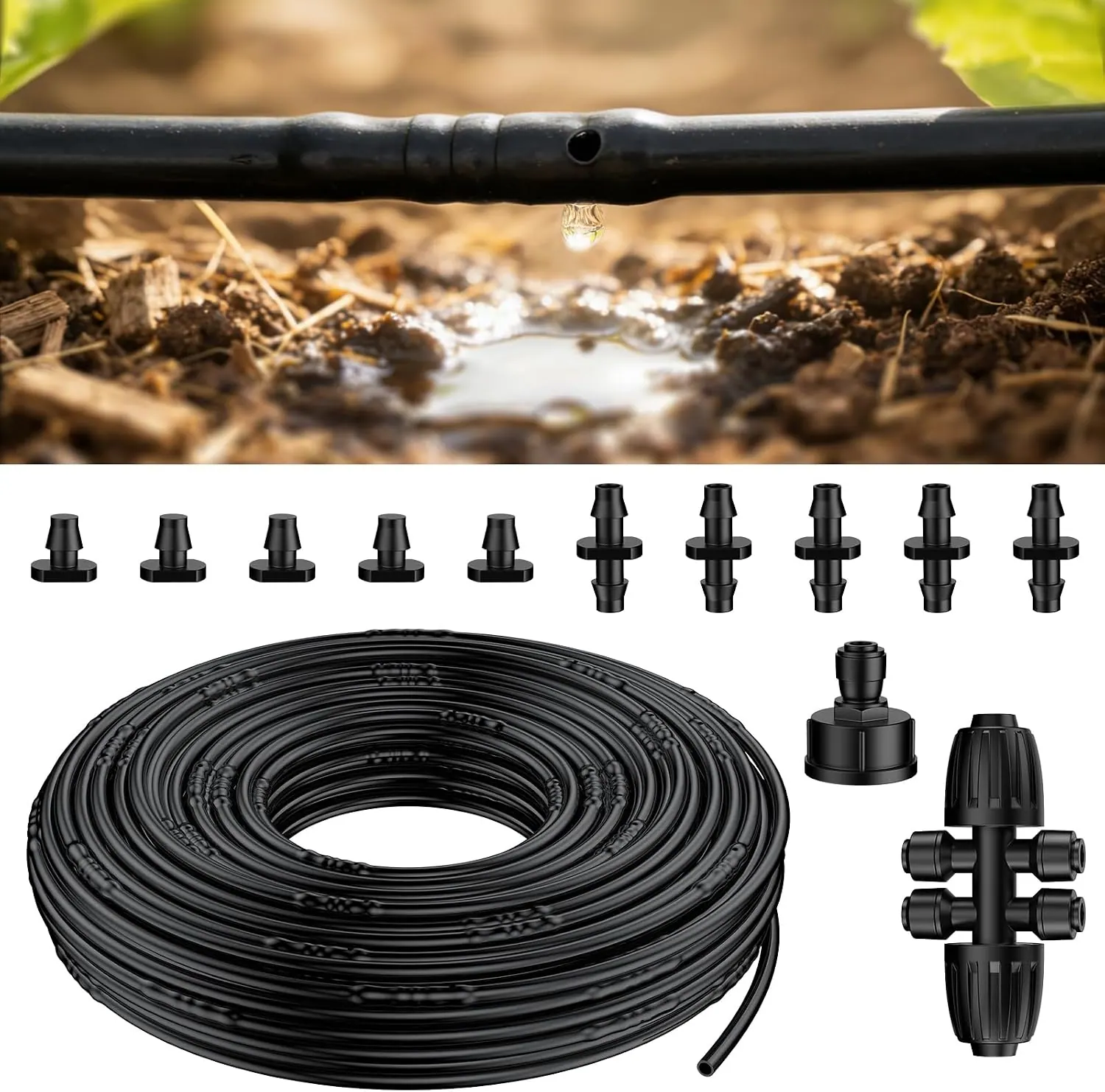
Use a main line along the bed edge, with emitter tubing beside each planted row or short branches to individual plants. Place outlets so water can reach the active roots without repeatedly soaking the stem. A continuous planted row may suit inline emitter tubing; widely separated plants may be easier to adjust with individual outlets.
Do a short supervised trial. After infiltration, inspect beside an outlet and midway between outlets at roughly 5–10 cm (2–4 in), then check deeper where established roots occupy the soil. Move or add outlets if dry gaps remain. In heavier soil, visible spreading at the surface does not guarantee adequate depth. In a pot, check the opposite side of the root ball as well as the side receiving water.
Calibrate the zone
Measure several outlets with the whole zone open. Collect water for five minutes, label each cup and compare the near, middle and far ends. An outlet collecting 150 mL in five minutes produces 1.8 L/h, approximately 0.48 US gph. This is a calculation example, not the specification of a Pawfly emitter.
For each plant, add the outputs of its outlets. Runtime in minutes equals your selected water volume in litres divided by combined L/h, multiplied by 60. Choose and revise that volume using the actual soil response. If a far outlet produces substantially less, investigate pressure, restrictions and line length before extending runtime for the entire bed. See measuring runtime and uneven-flow troubleshooting.
Rain, heat and ongoing checks
After rain, inspect the root zone before deciding whether irrigation is needed. Covered growing areas may receive no useful rainfall. During a hot or windy period, check containers and exposed trellised rows more frequently, then return to observation-based settings as conditions ease. Avoid standing water in trays or saucers and persistent saturated soil.
At each weekly inspection, look for moved outlets, blocked openings, leaks near trellis feet and dry patches between plants. Record crop stage and recent weather alongside measured flow and runtime. If leaves remain wilted despite moist soil, investigate plant health instead of automatically adding more water.
Choose compatible components
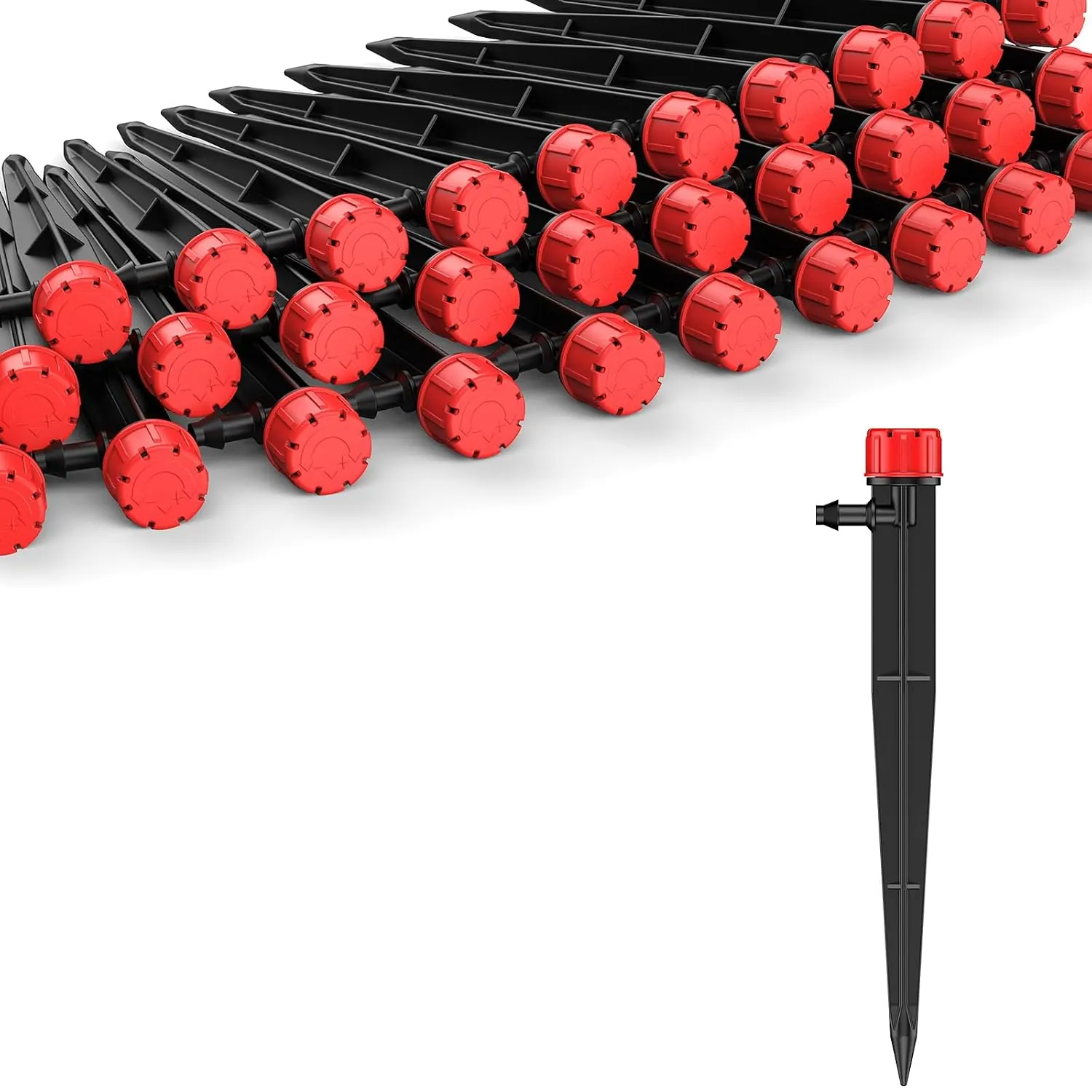
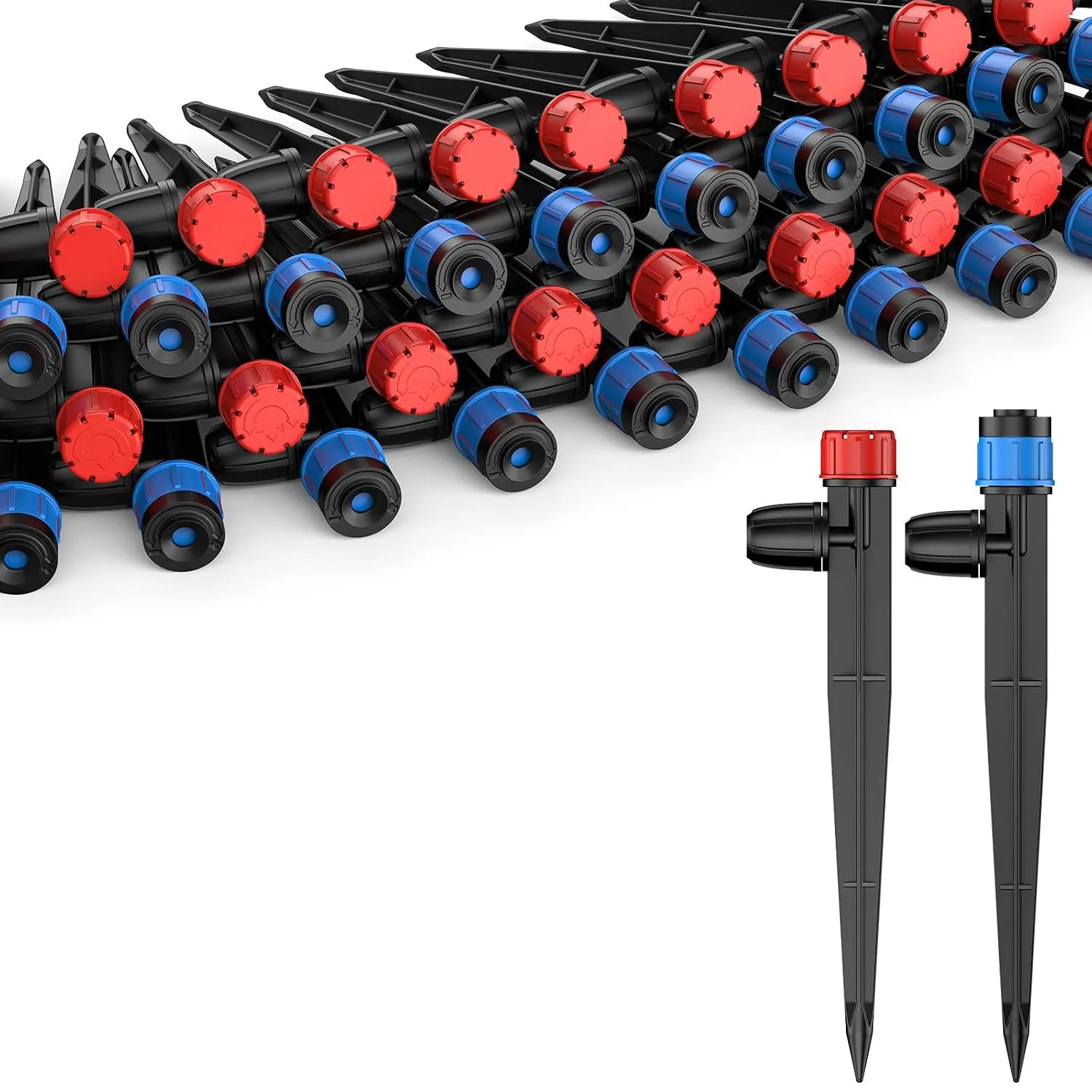
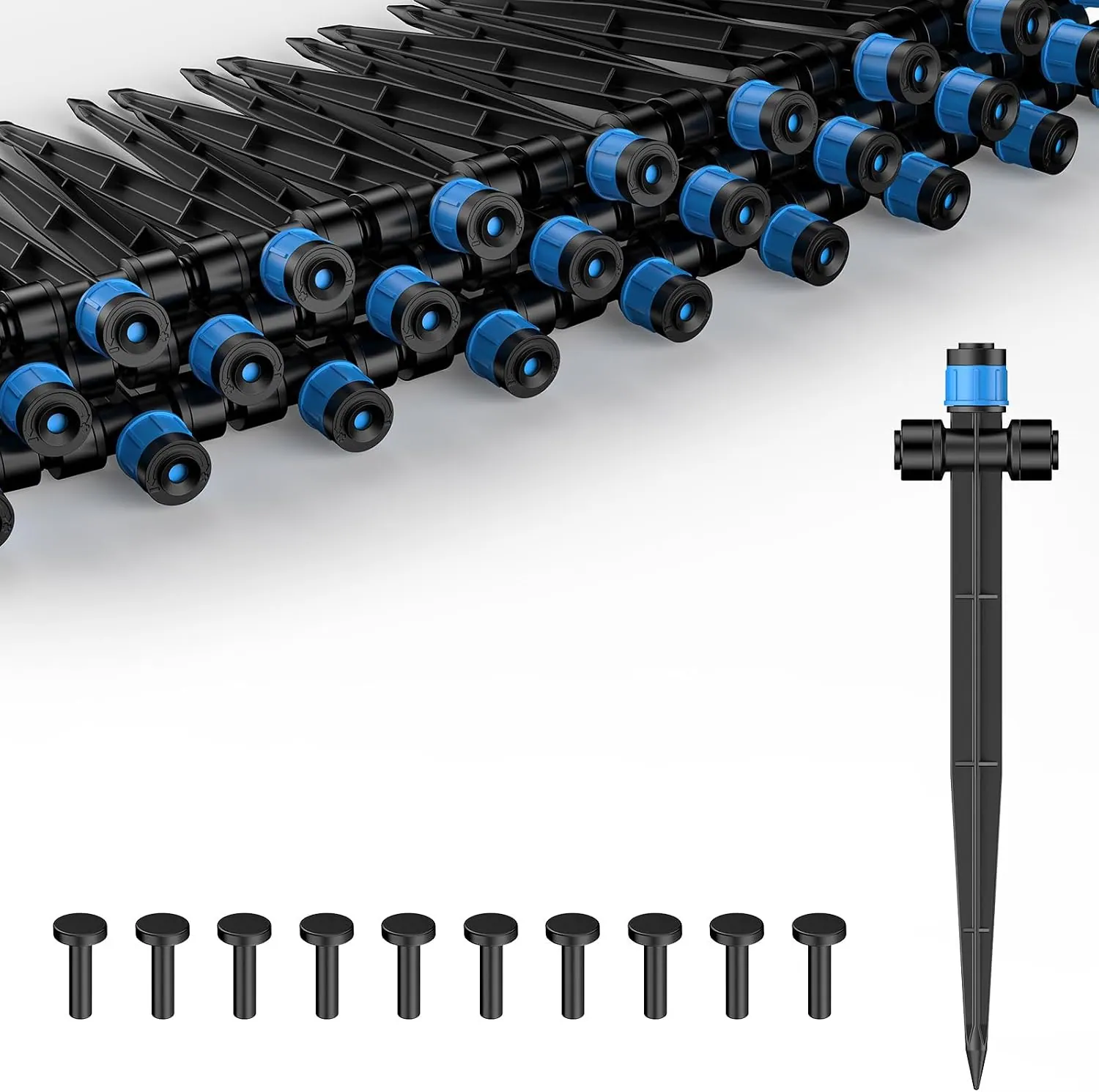
Compare inline emitter tubing, whose listed outlet spacing is 6 in (15.24 cm), with adjustable emitters. Listed spacing describes the tube, not a guarantee that the soil will wet evenly. Verify the actual wetting pattern. Browse tubing and read the connection sizing guide before mixing fittings.