Set up for the roots, not the calendar
Use this approach for sweet peppers or chilli peppers in draining beds and containers. Keep pots separate from in-ground plants when their drying rates differ. Record whether your bed is sandy, moisture-retentive, mulched or exposed to wind; those observations are more useful than copying another grower's number of timer minutes.
University of Minnesota's pepper guidance discusses watering according to soil conditions and avoiding wet foliage where possible. This guide translates that principle into a small drip-system checking routine. It does not specify a region-independent amount of water per pepper plant. Growing peppers
Change the checks with growth stage
For a new transplant, inspect the original root ball and the surrounding soil separately. Until roots spread, water arriving outside the root ball may miss much of the plant's usable root zone. As the plant branches and becomes established, widen the wetted area if necessary. During flowering and fruit filling, pay attention to repeated drying followed by heavy saturation. At the end of a season or during cooler weather, reassess frequency instead of leaving a summer setting running unchanged.
Emitter placement and soil differences
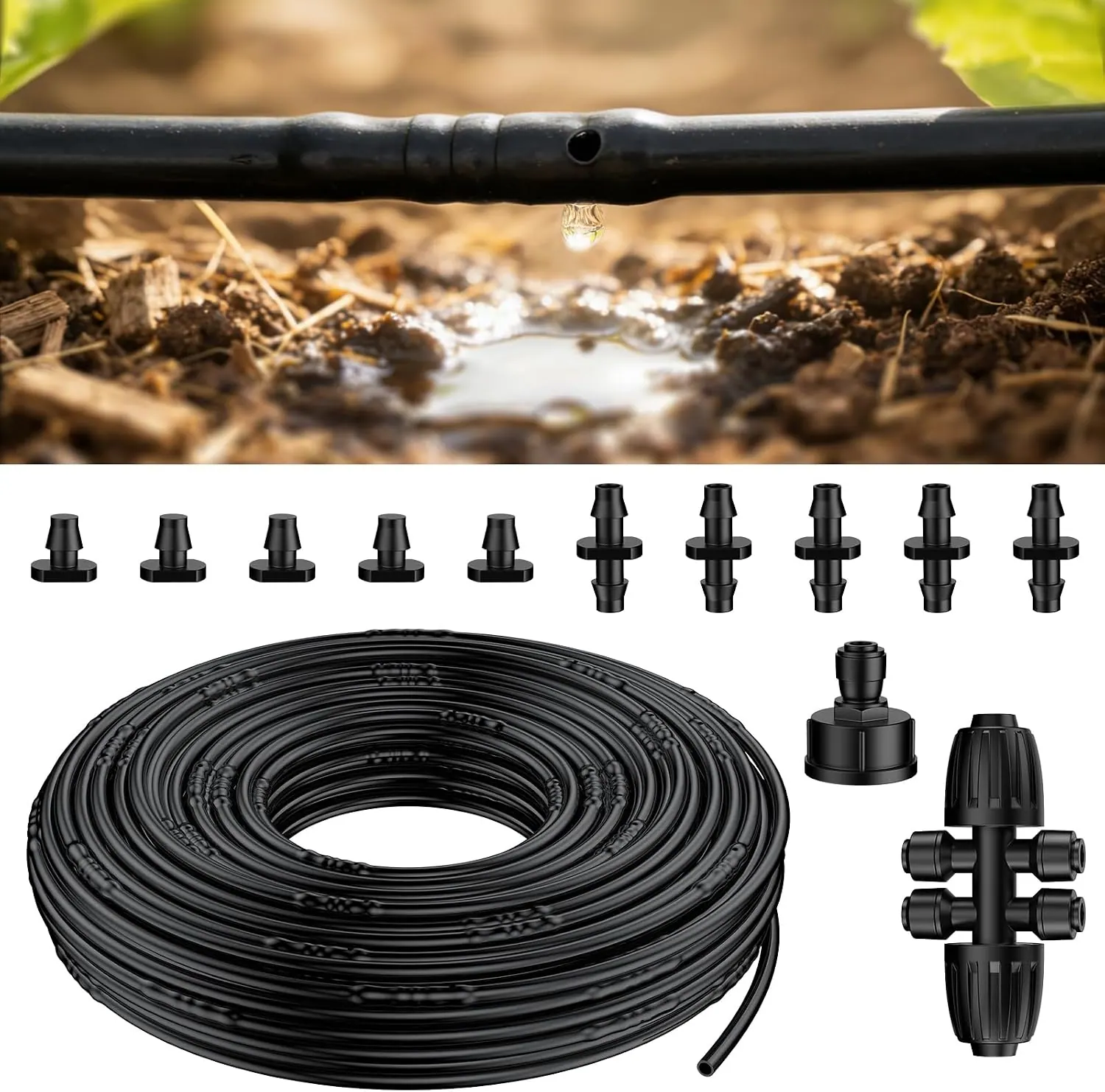
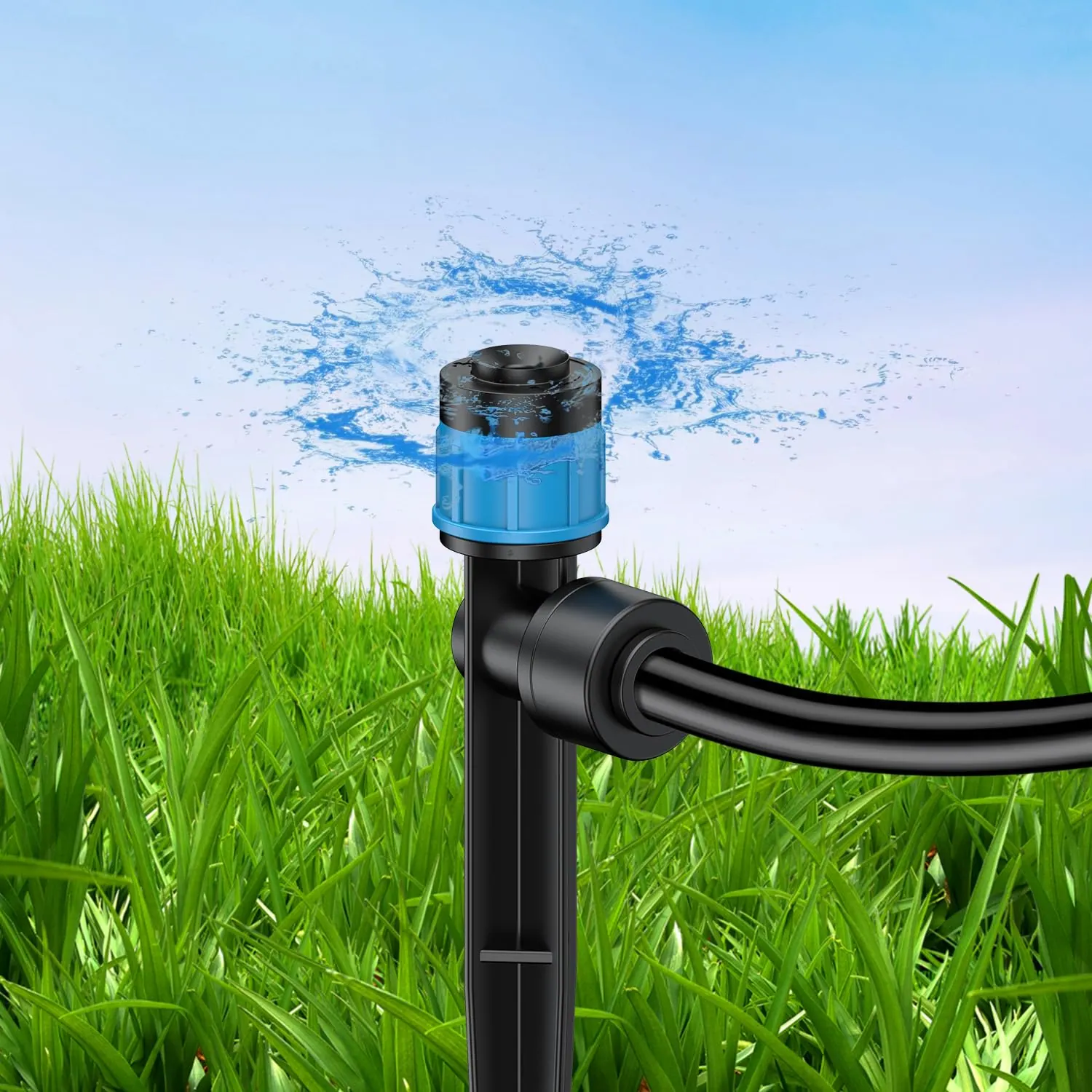
Use short branches from the supply tube to wet soil alongside the plant. Avoid making the stem the centre of a permanently wet spot. Start with a position that reaches the root ball and inspect the result before deciding whether another outlet is necessary.
After a supervised cycle, compare soil beside the outlet and at the edge of the root ball. Check around 5–10 cm (2–4 in) deep and farther into the rooted soil when practical. Surface colour alone can be misleading under mulch. If water pools on slow-infiltrating soil, stop and allow infiltration before trying a smaller pulse. In a container, ensure the mix wets across its width and that drainage holes are open; runoff down the pot wall is not proof that the centre is moist.
Measure a setting you can reproduce
Run the whole zone and collect several outlet flows for five minutes. A cup containing 100 mL corresponds to 1.2 L/h (0.32 US gph). Write down the emitter adjustment position as well as the measured flow, because opening an adjustable head changes the result.
Runtime equals selected litres ÷ combined L/h × 60. For example, a combined measured flow of 2.4 L/h (0.63 US gph) would deliver a selected 0.6 L (0.16 US gal) trial volume in 15 minutes. These numbers illustrate arithmetic only. Inspect the soil after infiltration and again before the next planned cycle to decide whether that trial suits your plant. Full runtime worksheet
Weather and troubleshooting
Measure useful rainfall at the planting area and reduce or skip watering only after checking the roots. During heat or dry wind, inspect more frequently, especially in small pots. Check moisture before interpreting afternoon droop as thirst. Do not keep a wilted plant in saturated soil while trying successively longer cycles.
If one plant dries out sooner, collect its emitter flow and compare it with a healthy neighbour. Check shade, container size and plant size before changing the entire zone. See clogs and uneven watering.
Parts to compare
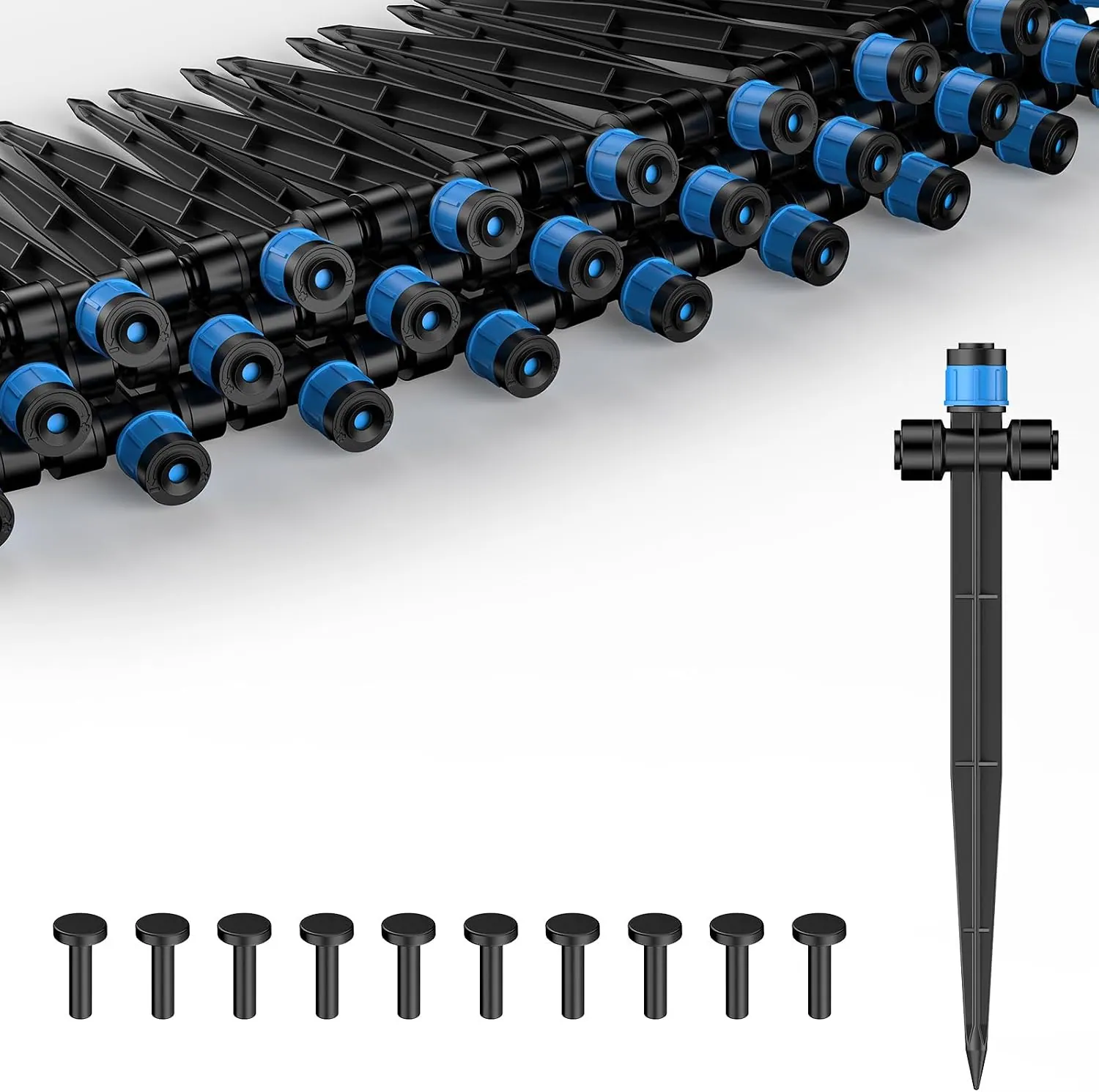
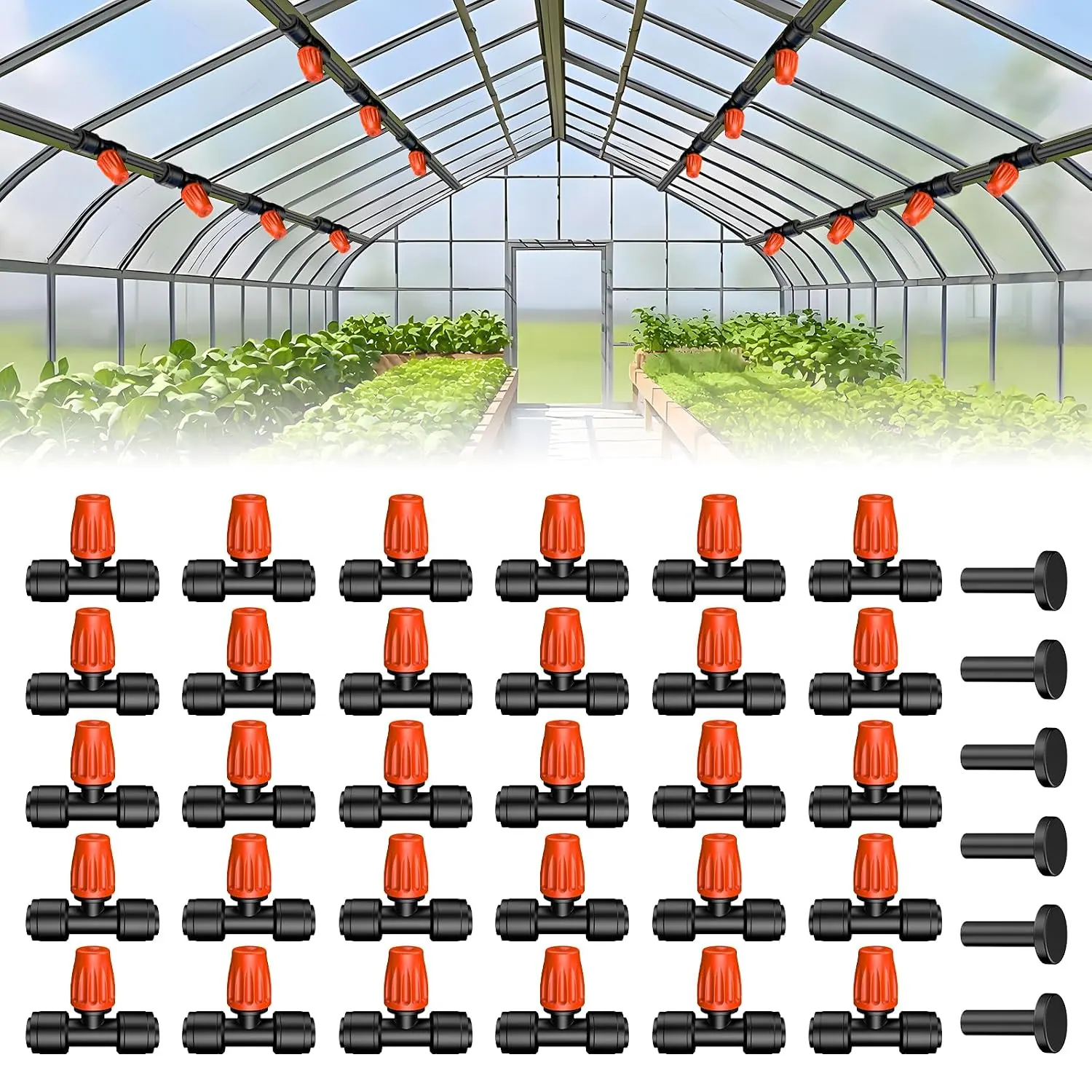
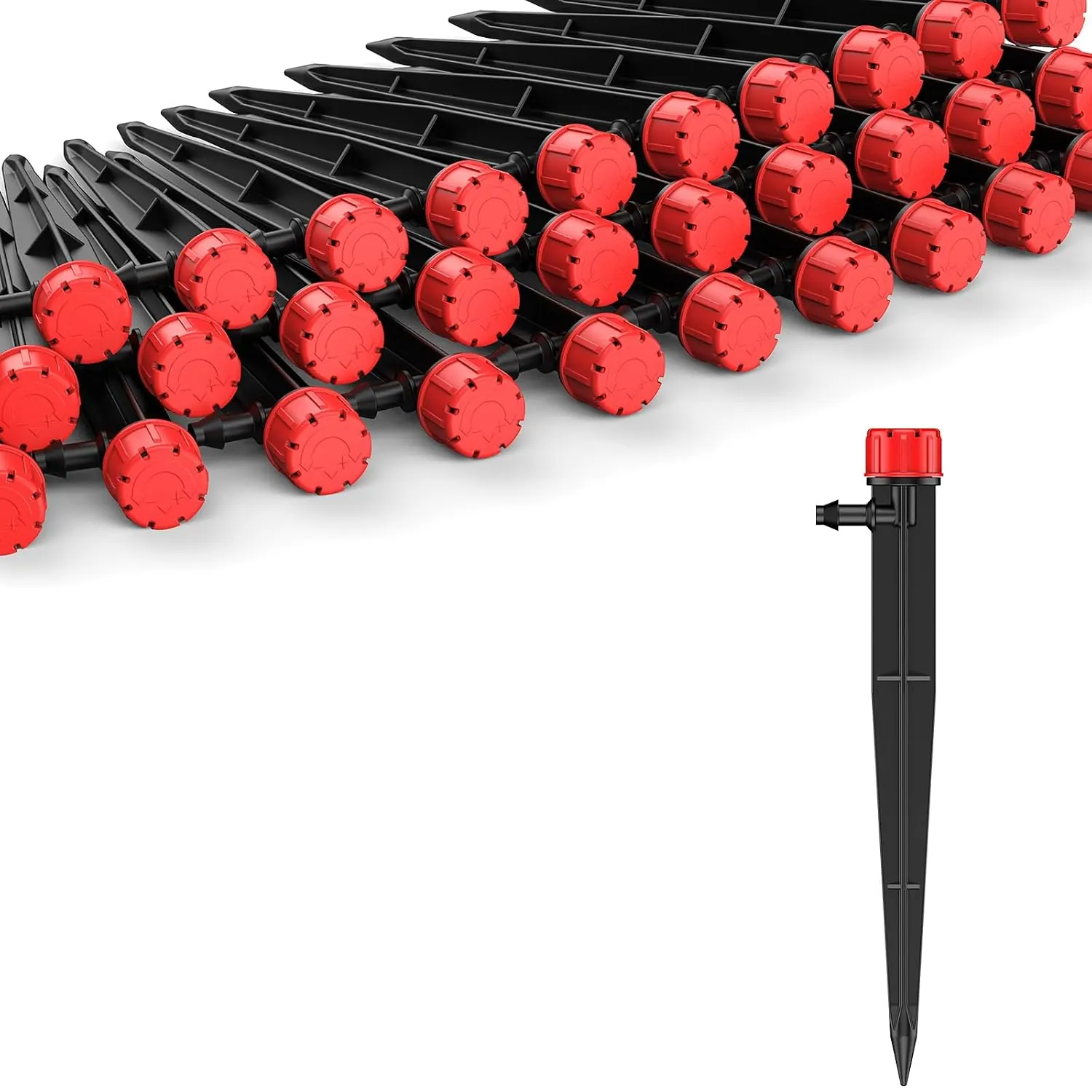
Browse drip emitters and the Pawfly push-to-fit emitter family. Verify the tube dimensions and connection style; a nominal 1/4 in label alone is insufficient to establish compatibility. Use the sizing checklist before ordering.