Where this setup fits
Use this method for tomatoes in an outdoor bed, a raised bed or a container with working drainage holes. Put containers on a separate watering zone where possible: a timer setting that works in garden soil may saturate a small pot or leave a large, exposed pot dry. This is a setup and observation method, not a tested yield claim or a universal watering schedule.
Adjust as the plant grows
After transplanting, check the original root ball as well as the surrounding soil. A wet patch elsewhere in the bed does not prove the transplant is receiving water. As roots spread, broaden the wetted area rather than keeping every outlet against the stem. During flowering and fruit growth, avoid repeated swings from very dry to saturated soil. Consistent moisture is part of tomato care; water alone cannot diagnose or cure every fruit disorder. University of Minnesota tomato guidance
Place and test the emitters
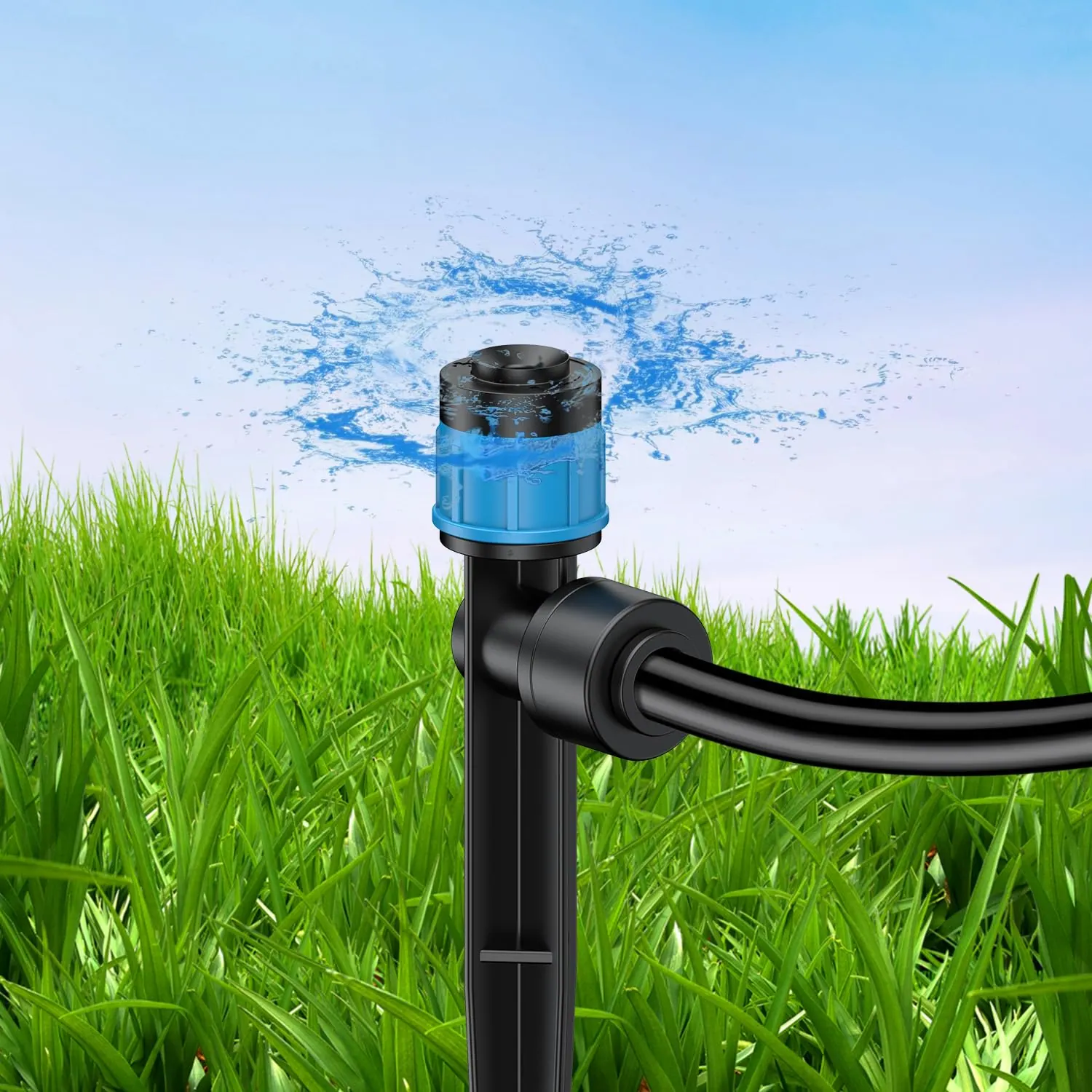
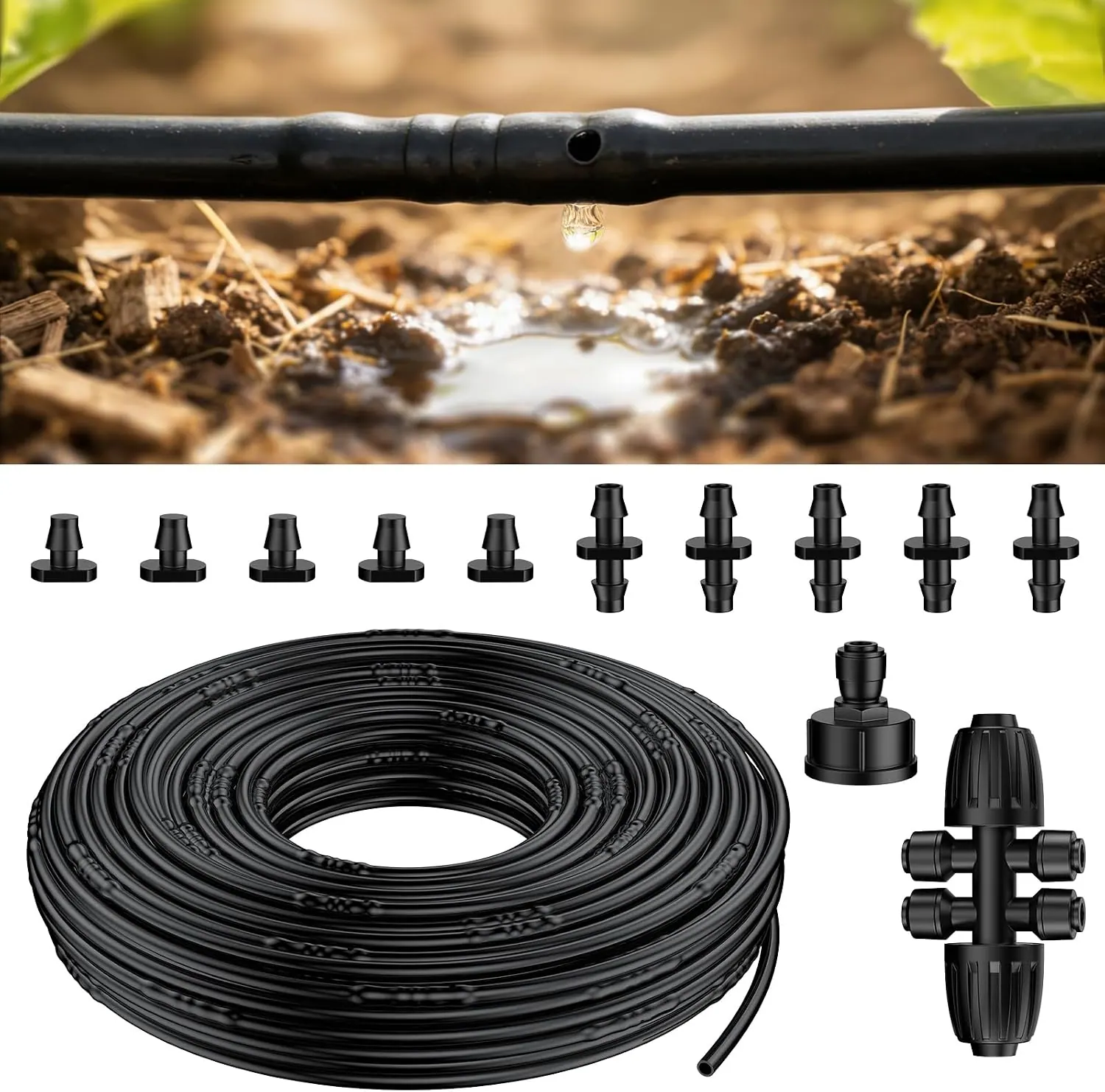
Run a supply line beside the row and use short branches to reach plants. Place outlets beside the root ball, away from direct contact with the stem. Secure the tubing so cultivation cannot move it. Choose emitter positions by checking where water actually reaches, rather than assigning one emitter to every plant regardless of soil.
For a trial, inspect a narrow soil sample beside an outlet and between outlets after water has infiltrated. Compare moisture at approximately 5–10 cm (2–4 in) and farther down within the occupied root zone without disturbing major roots. Sandy soil may leave narrow wet columns; slow-infiltrating soil may pool at the surface. Reposition outlets or add a second wetting point if a substantial part of the root ball remains dry. Do not increase the whole zone's runtime to compensate for one blocked emitter.
Measure before setting the timer
Collect each representative outlet into a measuring cup for the same interval, with the complete zone running. Include the nearest and farthest plants. Volume in mL × 60 ÷ minutes ÷ 1,000 gives L/h; divide L/h by 3.78541 for US gph. Adjustable emitters need measurement at their actual setting and operating pressure.
For an arithmetic example only, two outlets each measured at 2 L/h (0.53 US gph) deliver a combined 4 L/h (1.06 US gph). Delivering a selected test volume of 1 L (0.26 US gal) takes 15 minutes. That test volume is not a daily tomato requirement. Use the runtime guide to record your own result, then inspect the soil before repeating it.
Rain, heat and verification
Record rain reaching the bed, not merely rain in the forecast. Check under mulch and inside covered beds before skipping a cycle. In hot or windy weather, inspect moisture more often; midday leaf droop alone is not a reason to keep watering already wet roots. For pots, confirm that water spreads through the mix instead of escaping immediately down one dry channel. RHS container watering
Keep a log of plant stage, soil condition before watering, measured output, runtime and the next inspection. A successful setting wets the intended root zone without persistent ponding or an extended waterlogged period.
Parts and next steps
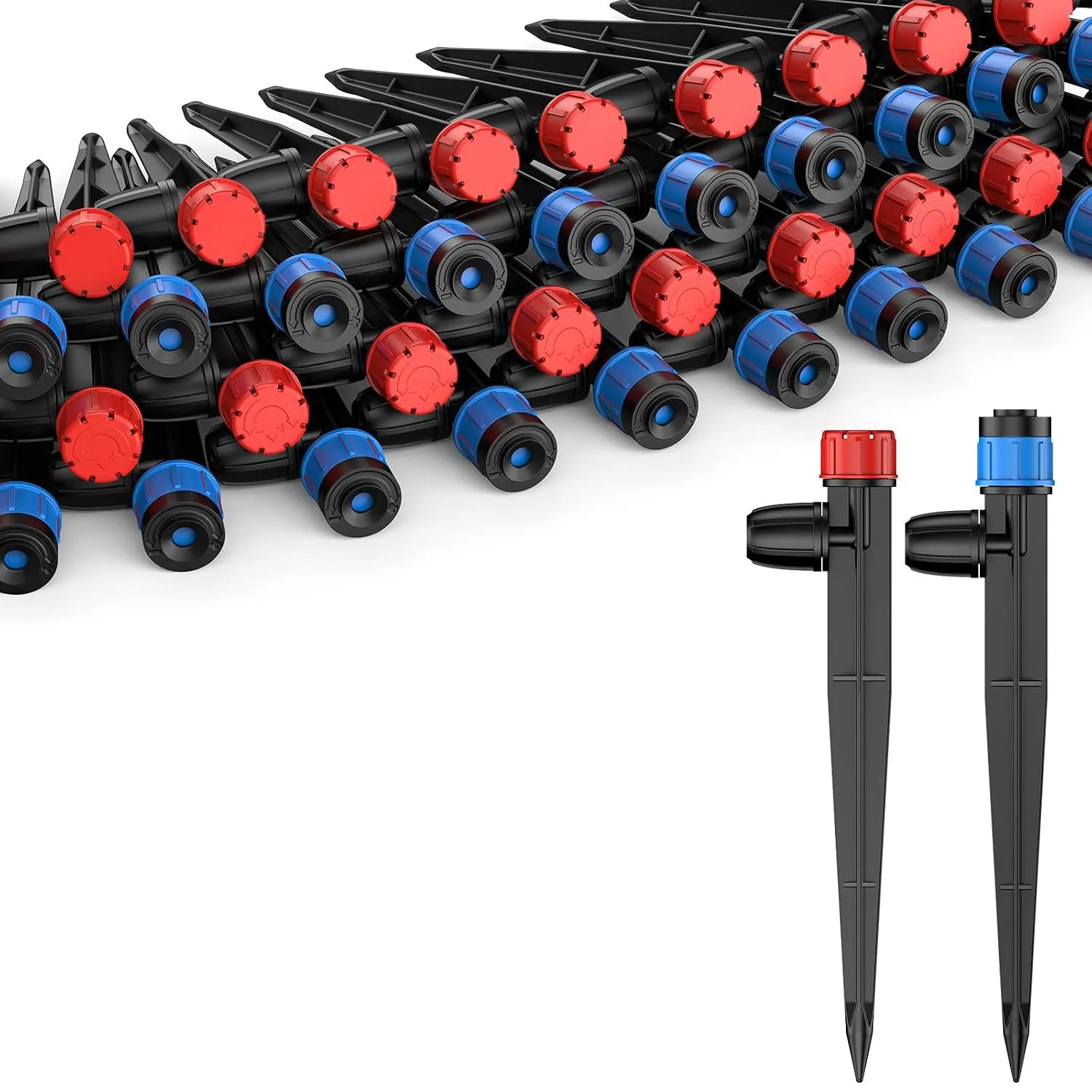
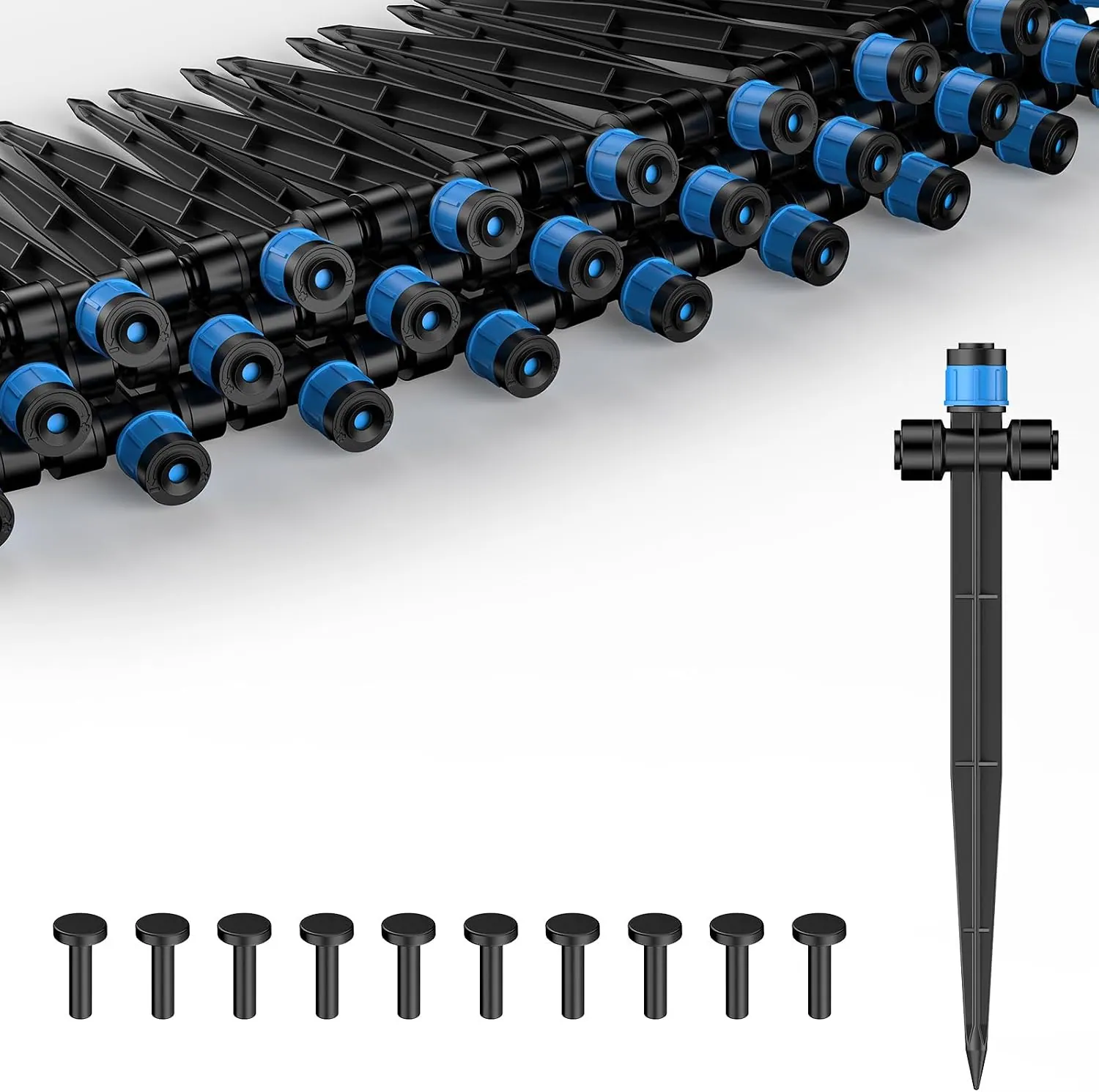
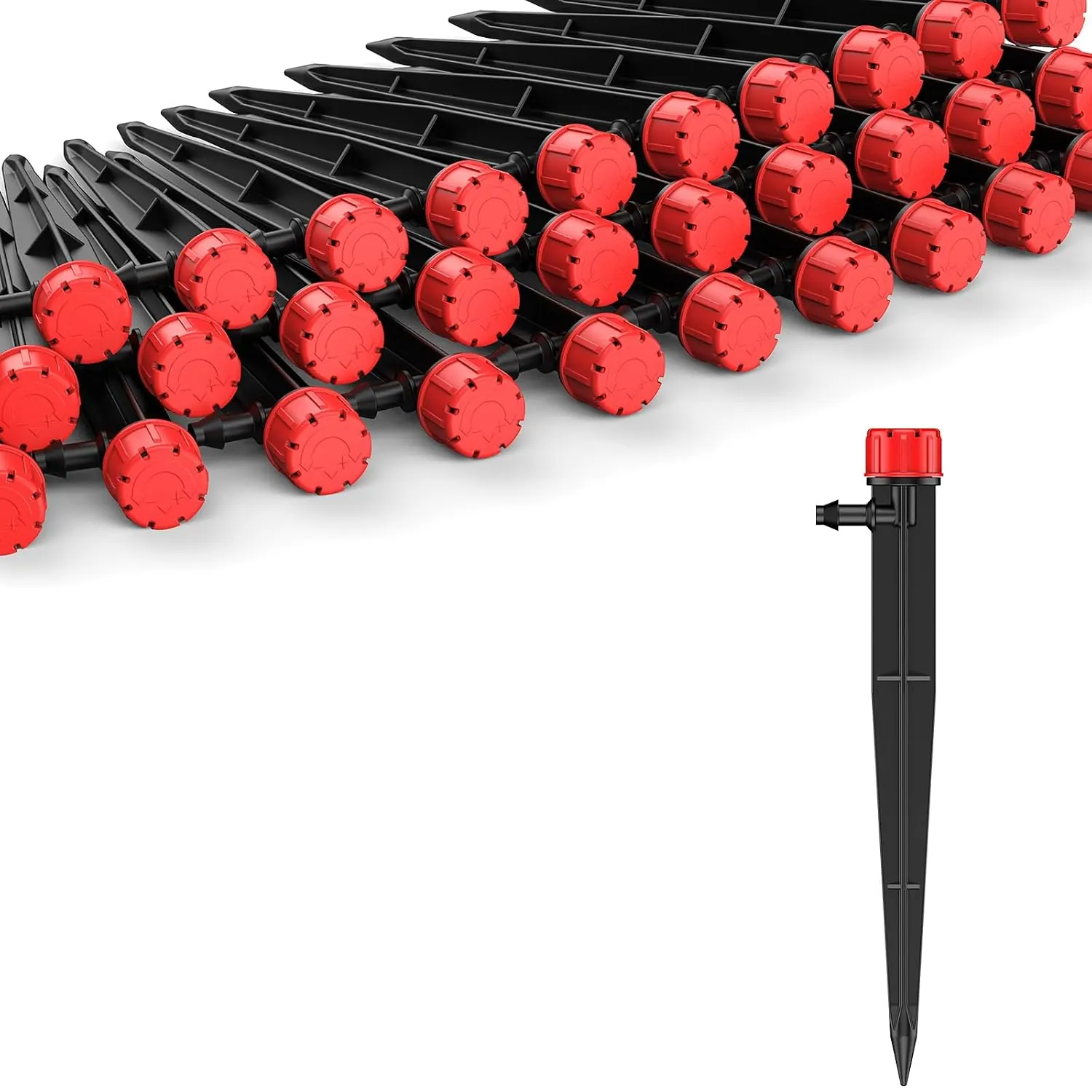
Browse irrigation tubing and emitters. The Pawfly adjustable emitter family is an option to evaluate, not a fixed-flow promise. Check its connection type and measure output before choosing a timer setting. For multiple rows, see the raised-bed layout guide.